Diberdayakan oleh Blogger.
Tampilkan postingan dengan label Turkey. Tampilkan semua postingan

Selasa, 25 Maret 2014

Turkey Blocks Google DNS, YouTube Could Be Next

The social media crackdown in Turkey continues, as the country has moved to block backdoor access to communications services like Twitter through Google DNS. YouTube, another service offered by the global search giant, might be next after refusing to remove videos alleging government corruption.

Prime Minister Recep Tayyip Erdogan’s government called the ban a “preventive measure” after the service had been used by citizens to spread allegations of corruption within the government. “Twitter has been used as a means to carry out systematic character assassinations by circulating illegally acquired recordings, fake and fabricated records of wiretapping,” the government said in a statement.

After Twitter users found themselves unable to access Twitter beginning Thursday, many turned to Google’s DNS service as a way to circumvent the ban. That proved only a temporary solution, however, as the government has removed access to that service as well.

Of course, there are other similar services out there, like OpenDNS, which we’ve heard is still up and running. According to one of our sources in Turkey, VPN usage is at all time high, along with usage of privacy tools like ZenMate and Onavo (which had been acquired by Facebook last fall.

Twitter isn’t the only communications service that could find itself banned in Turkey. The government has requested the company remove videos that allege corruption, a request that YouTube says it has refused. That has led some internally to believe that it, too, could find itself blocked in Turkey.

“We feel an immediate threat,” one YouTube employee told the Wall Street Journal.

If Turkey does ban the video-sharing site, it wouldn’t be the first time YouTube was not available to residents there. The site had been banned several times between 2007 and 2010.

Update: Turkey is now blocking Twitter at the IP level, so changing DNS servers will no longer work.

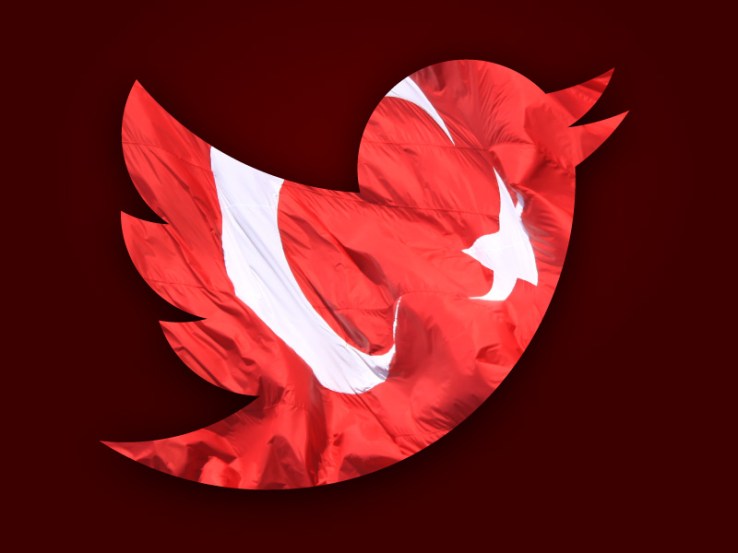
Image: composite with photo by Flickr user Jeremy Vandel under a CC by 2.0 license

Turkey Moves To Block Twitter At The IP Level

In its effort to curtail access to Twitter, Turkey is getting more aggressive with a block of the service’s IP address, according to sources inside Turkey as well as a DNS provider. That means that changing their DNS server, whether it be Google DNS or OpenDNS, will no longer work for residents in the country.

Previously, Twitter users in Turkey had turned to Google DNS and other services as a way to circumvent the country’s ban of Twitter as a communication service. The government later thwarted those efforts with a block of the DNS service as well, while other services, like OpenDNS, remained available.

But the latest move by the government will make it more difficult, but not quite impossible, for residents to access Twitter. By blocking Twitter at the IP level, DNS services will no longer work. Instead, citizens are being urged to access the service via VPN or by using the Tor anonymity network.

While Turkey seeks to reduce usage on Twitter, its ban of the service has had just the opposite effect. Residents there who have found workarounds are actually tweeting more than before the government sought to block it.

Twitter Says It Is Standing By Its Users In Turkey, Hopes To Have Access ‘Returned Soon’

Help appears to be at hand for advocates of free speech in Turkey, where Twitter access has been cut off after the Prime Minister accused it of helping people spread false information about him. Twitter has announced that it is standing by its users and working on restoring access soon.

Today, the site and its users in the country saw a huge wave of support from around the world, as people rallied around the social network to protest the blockade. The Prime Minister, Tayyip Erdoğan, said he wanted to “wipe out” Twitter and other sites that have been critical of him and a corruption scandal that has been brewing.

In Turkey, the blockade has had many loopholes for those who want to find them. People have been using SMS messages to post to the site — Twitter’s recommended route — while others have used a workaround by changing their DNS addresses, typically using Google’s DNS and OpenDNS — a route that has become a meme in itself.

Graffiti over symbols of the state and sides of building indicating DNS routes that Turks could use to get around the clumsy ban quickly went viral:

The ban on Twitter usage, weak and porous as it was, was implemented gradually. Its lifting will also likely take place in pieces. That means when and if Twitter comes back online it may not be for everyone. “I constantly talk to my friends & family. It’s still blocked and everyone is using openDNS to access Twitter,” Turkish expat Halil Kabaca, CEO and Founder at Novarum Software & Consulting, told us by email.

We’ve heard that there may also be a protest planned over the Internet blocks.

With Twitter inaccessible for many, we’ve heard people are going to Eksisozluk.com, another popular social site, to communicate more. But the fact that Twitter has such a high international profile, and has been such a touchpoint around other political conflicts has very much amplified this story.

“It is a pretty big deal over here. Everybody is talking about it (ironically, on twitter),” Berna Yildiz, a foreign trade manager for BEM Berk, told us in an email today after we noticed she was Tweeting from Turkey (using a DNS workaround, it turns out). “There was a time they have banned YouTube and it stayed that way for a looong period. But even then, the president said ‘you can find a way, I use YouTube.’ [But] Erdoğan is using Twitter to create a diversion. Nothing else. There have been new regulations to spy on and restrict internet usage a month ago. Because of the tapes released about his corruption.”

Turkey is unfortunately not a stranger to blocking shenanigans. “Turkey is one of our largest traffic sources in Europe,” David Ulevitch, the founder and CEO of OpenDNS, tells us. “This isn’t the first time they’ve blocked sites.” He notes that sites like WordPress in the past have also been blocked. “Using OpenDNS and our dnscrypt client that encrypts DNS is advised.”

If you need to change your DNS settings to get around the ban, or any future ban, or to speed up your access if it happens to feel slow, head here if you are a using a Mac, and here if you are on a PC. Those instructions will help you use either Google’s Public DNS, or OpenDNS. If one doesn’t work for you, try the other.

Twitter has about 10 million users in Turkey, and this blockade has had the exact opposite effect on awareness of the country’s political situation and those who are opposed to it, even if usage has definitely dropped in the country itself.

According to Sysomos, there have been 8.5 million tweets in total in Turkey from 12 AM ET March 19 – 10 AM ET March 21, compared to only 1.2 million tweets in Turkey from 12 AM ET March 21 – 10 AM ET March 21.

Around 1 million of those tweets can be attributed to the fact that the Twitter website is blocked, but users can still send tweets via SMS, Sysomos said.

However, in the last 7 days, worldwide tweets that mentioned both “Turkey” and “Twitter” went from a steady 200 per day to 80,000+ per day on March 20 and March 21. In other words, the effect of the ban has backfired. Instead of silencing dissent, it has given it new voice, and momentum.

Image: composite with photo by Flickr user Jeremy Vandel under a CC by 2.0 license

Senin, 24 Maret 2014

The White House Blasts Turkey For Blocking Twitter, Calls For Its Reinstatement

White House Press Secretary Jay Carney today responded to the Turkish government’s attempt to block Twitter in the country. The suppressive effort failed in the most basic sense, as Twitter users could still tweet via SMS, or change their DNS settings and get around the block.

Here’s the White House:

The United States is deeply concerned that the Turkish government has blocked its citizens’ access to basic communication tools.  We oppose this restriction on the Turkish people’s access to information, which undermines their ability to exercise freedoms of expression and association and runs contrary to the principles of open governance that are critical to democratic governance and the universal rights that the United States stands for around the world.  We have conveyed our serious concern to the Turkish government, urge Turkish authorities to respect the freedom of the press by permitting the independent and unfettered operation of media of all kinds, and support the people of Turkey in their calls to restore full access to the blocked technologies.

Importantly, the Obama administration just called Twitter a “basic communication tool,” implying that tweets are on par in terms of their importance to a society to phone calls, texts and the like. It’s also good of the White House to directly connect free speech and democracy.

It will be interesting to see what comes next for Turkey: How do you walk back a Twitter ban?

There have been reports that the blockade is being lifted, albeit slowly. The ban didn’t descend all at once, and so it appears that the ban won’t lift all at once. We’re monitoring the situation as well as we can from here. If you’re on the ground, our tips line would love to know what you see.

IMAGE BY FLICKR USER Mark Skrobola UNDER CC BY 2.0 LICENSE (IMAGE HAS BEEN CROPPED)

Jumat, 21 Maret 2014

Twitter Goes Dark In Turkey Hours After The Country’s PM Threatened To “Wipe Out” The Service

After the Turkish Prime Minister Tayyip Erdoğan promised that he would “wipe out” Twitter after it apparently ignored court orders asking the site to remove certain corruption allegations, the service has gone dark in the country.

The situation is developing: a site that lets the public track decisions made by the courts over Internet communications indicates that today the “İstanbul Cumhuriyet Başsavcılığı (TMK 10. Maddesi İle Görevli) has been implemented by Telekomünikasyon İletişim Başkanlığı” — it’s the most recent of four Twitter-related decisions made by the court.

A Twitter spokesperson tells us, “We’re looking into this now.” Twitter’s @policy and (very little used) @twitterTurkey accounts are also providing updates.

So far, that has offered users a way of posting tweets by way of SMS messages:

According to earlier reports, the prime minister has been threatening to go after social media sites in his battle to respond to allegations being made on them — specifically Twitter and YouTube — linking him to a corruption scandal. The comments have become increasingly heated as the country gears up for an election on March 30.

“We will wipe out all of these,” he said at a rally in reference to Twitter and other sites where people have been speaking out against him.

This is not the first time that Twitter has been caught in political crossfire and shut down in the process. It was blocked in Egypt in 2011, Pakistan in 2012, and China in 2009, among many other incidents. In France, the government has been battling long and hard with the site over how much influence it should have in forcing it to take down certain tweets and accounts if they violate French law, which sometimes runs counter to wider freedom of speech arguments.

Ilhan Tanir, a Turkish analyst based in Washington who was one of the first to highlight the block, has also published what he says is a statement from the U.S. State Department over the block:

“As we have previously stated, we remain very concerned by any suggestion that social media sites could be shut down. Democracies are strengthened by the diversity of public voices,” the statement reads. “An independent and unfettered media is an essential element of democratic, open societies, and crucial to ensuring official transparency and accountability.”